Wednesday, June 29, 2011

Moving Right Along . . .

So, in between finally listening to the latest Dredg album (kind of weird and very unexpected, but not really as bad as everyone says, as long as you're in the right frame of mind) and completely geeking out over the newly-released single from Dream Theater (it can be heard here, and it's really good), I figured I was about due for another post, if only to get a bit closer to being caught up to the present day in releases.


Korn - Korn III: Remember Who You Are (July 6, 2010)


Love 'em or hate 'em - and there are plenty of people in either camp - Korn has never been a band to make the same album twice.  Throughout their career, the band has flip-flopped between slick, highly-produced, highbrow albums chock full of left-field musical flourishes and the opposite extreme of raw, unrefined, visceral nu-metal simplicity.  Both approaches have yielded a range of results, but Korn III: Remember Who You Are (the Roman numeral in the title seems to reflect yet another lineup change: the addition of drummer Ray Luzier) falls squarely and unquestionably in the latter category, adding an intentionally low-fi, almost St. Anger-like coat of paint to the band's chugging, simplistic brand of heaviness.  It's a loose, even sloppy record, but in places, this aesthetic actually complements Korn's sound nicely. The trouble with this record, as on a good deal of their other records, is that the songs tend to run together with little to distinguish any of them from one another.  Jonathan Davis's limited emotional range and unsophisticated - to put it quite nicely - lyrical approach tends to get overbearing, and James "Munky" Shaffer's guitar parts walk a thin line between refreshingly uncluttered and simply unremarkable; Reginald "Fieldy" Arvizu's signature bass sound is as grating as ever, and Luzier's drumming is sadly under-utilized - the guy's a fantastic drummer, but he doesn't seem to be a good fit for a band like Korn.  Aside from a few tracks where the formula seems to click, the majority of Remember Who You Are tends to simply run together into a formless mass of average low-IQ-metal - slightly grittier than normal on the surface, but with the same uninspired content underneath.


Rating: 2.5/5


Standout Tracks: "Oildale (Leave Me Alone)," "Are You Ready To Live?," "Move On"


Avenged Sevenfold - Nightmare (July 27, 2010)


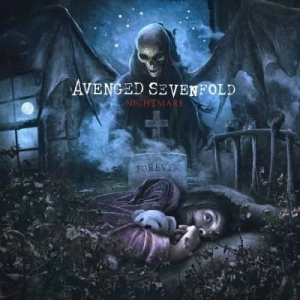
Anytime a band loses a member to a tragic and untimely death, one of two things tend to happen: either the band continues on with renewed inspiration in honor of their fallen comrade and produces some of the best material of their career, or the remaining members find themselves unable to continue as more than a shadow of their former musical selves.  When Avenged Sevenfold's drummer Jimmy "The Rev" Sullivan passed away during the writing process for Nightmare, all eyes were on the band to see which one of these scenarios would play out.  Thankfully, the remaining band members were up to the challenge, and produced one of the best albums of their career.  A7X had finely tuned their unique mix of punk-metal energy, hard-rock attitude, considerable songwriting ability, and virtuosic playing over the course of their previous two albums (2005's City Of Evil and 2007's self-titled release), and it appears again here in top form.  Nightmare is overflowing with enough satisfyingly chunky riffs and anthemic choruses to silence anyone who ever doubted the band's talent.  Much ado has been made of the fact that none other than Mike Portnoy (formerly of Dream Theater) handled the drum tracks in The Rev's absence and briefly toured with the band in support of the album; many have gone so far as to cite Portnoy's involvement with A7X as the reason he left DT.  But all that drama is neither here nor there - Portnoy's performance on Nightmare is as fantastic as you'd expect, and complements the band's sound very well while staying true to The Rev's drumming style.  Put simply, Nightmare's a damn good album, especially considering the situation the band overcame to make it.


Rating: 4/5


Standout Tracks: "Nightmare," "Save Me," "God Hates Us"


Paul Gilbert - Fuzz Universe (August 3, 2010)


In my mind, what sets Paul Gilbert apart from the rest of the top-tier virtuoso guitarists operating today (your Joe Satrianis and Steve Vais and Yngwie Malmsteens) is that he doesn't seem to take himself too seriously.  While everyone else is deadly serious about creating intricate art, Gilbert is in it just to have fun and shred his ass off - and, as evidenced more than ever by Fuzz Universe, his music is all the better for it.  The songs here are by turns epic (see "Blowtorch" and the title track), quick and snappy ("Count Juan Chutrifo" and "Don't Rain On My Firewood"), and tongue-in-cheek ("Batter Up" and "Propeller"), and every track simply exudes enjoyment.  Gilbert's skill as a guitarist has always been absolutely beyond question, and there are plenty of jaw-dropping displays of talent here to back that up - aside from being an incredible lead and rhythm player, he's an expert at coaxing all kinds of delicious tone from his instruments.  There's more than enough musical range covered here to keep things interesting, too, from headbanging, horns-throwing hard rock to jangly pop to retro shuffles and even classical (a performance of J. S. Bach's Partita In D Minor translates surprisingly well to electric guitar).  But the one overall feature pulling the album together is that it's just so much fun.  You can tell that Gilbert and all the rest of the musicians involved had a joyful experience making this album, and that joy is infectious - just try listening to Fuzz Universe without feeling some of that joy, I dare you.


Rating: 4.5/5

Standout Tracks: "Fuzz Universe," "Don't Rain On My Firewood," "Blowtorch," "Will My Screen Door Stop Neptune"

Monday, June 20, 2011

Just So You Know . . .

. . . I've been a little on the busy side.  Between moving to another state, lining up a new job, moving again, and getting ready for grad school, I haven't exactly had a whole lot of time to sit around and churn out reviews like I once did.  Not to turn Relative Pitch into just another personal-life blog that no one cares about (been there, done that, just like a million LiveJournal-scribing angsty teenagers before and since), but since that stuff directly affected my blogging output, I think it warrants mentioning.  Besides, I think I have a better excuse for my most recent unintentional hiatus than the last one (chalk the previous year-long drought up to pure, undiluted laziness; I'd like to think that's not the case here).


But anyway, lest you believe I've given up on the blogging thing again, here I am.  I'll be trying to get us caught up to the present day as far as music releases go; keep your eyes open for some blurbs about noteworthy releases over the past year or so, starting in this post - I'll be cutting back on the formally structured, one-review-per-post format a bit, because honestly, who wants to slog through that much blathering about every little CD?  You'll probably see it return for albums that are really a big deal (because, of course, that's not at all a subjective assessment of an album's worth), but it's probably not going to be the predominant format from here on out.  Besides, like I've pointed out before, it's not like I'm getting paid for this or anything.


Band Of Horses - Infinite Arms (May 18, 2010)

I stumbled across this album by online word-of-mouth, combined with some YouTube previewing, meaning that I didn't have a whole lot of previous knowledge of Band Of Horses before spinning Infinite Arms for the first time.  It's a refreshing way to approach a new release: minimal preconceptions of what you're expecting to hear.  Largely because of this, Infinite Arms was quite a pleasant surprise.  My first impression of the album's overall sound was that it reminded me of a much more country- and bluegrass-influenced Snow Patrol.  I don't feel like that description does the band justice, though - Band Of Horses is a really talented group, and their 2010 album has some top-notch indie-rock songwriting.  Words that come to mind when listening to this album: comfortable; homey; intimate.  The songs wrap around you like a well-worn pair of slippers on a winter morning.  Lyrically, each song seems to tell a simple yet evocative story, and it's hard not to get pulled in.  Although, really, there's no reason to resist the pull; this album is a consistent pleasure, even if it's not quite revolutionary.


Rating: 3.5/5


Standout Tracks: "Laredo," "NW Apt.," "Blue Beard," "Neighbor"


Nevermore - The Obsidian Conspiracy (June 8, 2010)


This was an album I had pretty high hopes for.  I'd heard a couple older Nevermore tracks prior to The Obsidian Conspiracy's release, and I had really enjoyed what I heard: super-heavy, well-written guitar riffs, impeccable musicianship (especially on the part of lead guitarist Jeff Loomis), and a suitably dark, if a bit cliched, lyrical approach.  Intending to make their 2010 album a streamlining of Nevermore's occasionally bloated prog-metal MO, the band apparently cut out whatever x-factor was in their songwriting process along with the proverbial fat they trimmed from their sound.  Don't get me wrong, there's still plenty here to headbang along to; Loomis continues to bring the goods as an absolutely shredding guitarist, letting loose on some technically amazing riffs and lead work.  Many of the songs tend to run together, however, with few enjoyable hooks to remember.  A lot of the blame for this falls on vocalist Warrel Dane: his oddly-inflected, almost classical-art-song-influenced performances just sound awkward in many places, making certain songs a chore to listen to.  Dane seems to really like harmonic-minor scales, too - two or three songs here feature almost the exact same exotic-sounding vocal melodies.  Almost everything about his performance seems uninspired, and that feeling seems to be shared by the rest of the band.  It's probably worth noting that Loomis and drummer Van Williams left Nevermore less than a year after The Obsidian Conspiracy was released.  Maybe they felt the same way about the album as I do.  (By the way, Jeff Loomis has an instrumental solo record entitled Zero Order Phase, released in 2008; I'd recommend checking that album out over this one any day.)


Rating: 2/5


Standout Tracks: "Without Morals," "The Obsidian Conspiracy," "The Day You Built The Wall"


The Gaslight Anthem - American Slang (June 15, 2010)


If you've ever listened to an album that made you feel like a kid again, then you know what listening to American Slang feels like for me.  I'm not usually a huge punk-rock fan, but The Gaslight Anthem seems to press a whole slew of buttons that most punk bands completely miss (not to mention the presence of a lot of other genres influencing their sound, including traditional American-heartland rock-&-roll and '90s-style alt-rock).  American Slang is an album about being young, when you had all kinds of new-found freedom but no idea what to do with it; when every reckless night out came packaged with a morning filled with second thoughts; when you were just jaded enough to realize that heartbreak is bound to happen, but still not immune to the way it brings the world crashing down around you.  Vocalist and songwriter Brian Fallon has a great gift for evoking all these emotions and more in each and every one of these top-notch, Americana-folk-meets-East-Coast-punk slices of life.  Musically speaking, the songs are excellent; this album is overflowing with guitar hooks and singalong choruses, to the extent that literally every song has the potential to get stuck in your head for days at a time.  Combined with the deliciously bittersweet feeling of nostalgia present in the album's lyrics, this makes for an unexpectedly compelling album, and one you'll want to revisit again and again.  It's easily one of the best albums of 2010.


Rating: 4.5/5


Standout Tracks: "American Slang," "The Diamond Church Street Choir," "Stay Lucky," "Old Haunts"


(Note: I have no idea what the hell is going on with the formatting of this post.  I normally don't have any issues with paragraph breaks and all that.  I've officially lost patience trying to figure it out, though, so you'll just have to deal with it looking a bit weird.)

Tuesday, March 8, 2011

Review: Deftones - Diamond Eyes

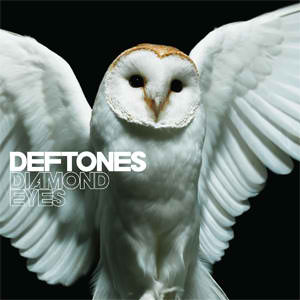
I’ve always thought it was pretty unfortunate that Deftones tends to get lumped in with the nu-metal scene.  Sure, they started their careers right around the same time - and even in the same geographical area - as bands like Korn and Limp Bizkit, and they’ve continued appearing on tour with their supposed peers in the genre as the years have gone by.  But Deftones never did quite fit in.  Sure, they could be just as heavy as any other band in the scene when they wanted to, but beneath the testosterone-fueled riffs, there always seemed to be a bit more substance.  Their melodies were more unpredictable, their riffs more technical, their rhythms more complex, and Chino Moreno’s distinctive vocals lent an almost ethereal quality to the band’s music.  Deftones perfected this mixture of energy and atmosphere on their third full-length, 2000’s White Pony, which proved that even the nu-metal scene was capable of producing music with real depth and emotional weight (and, paradoxically, proved that maybe Deftones wasn’t just another nu-metal also-ran after all).  As great an album as White Pony is, the band has spent the last decade trying to create another album that measured up to its achievement, with mixed results.  To their credit, they haven’t exactly been stuck in a sonic rut, trying to recreate the sounds found on their breakthrough; on the contrary, their following albums have covered a variety of ground, from the dark, vaguely lo-fi brutality of 2003’s self-titled release to the sonic experimentation and progressive leanings found on 2006’s Saturday Night Wrist.  In keeping with this trend, 2010’s Diamond Eyes finds the band shifting directions once more, tightening up their sound into an intense, intricate, and efficient juggernaut.  Does it escape the ever-looming shadow of White Pony?  Maybe not quite.  But it does offer a whole lot nonetheless.

For starters, Diamond Eyes has Deftones playing more tightly than ever.  The whole band locks into riff after propulsive riff, blazing through some of their most technically-challenging material yet.  If anyone ever doubted these guys’ playing ability, songs like “Rocket Skates” and the title track should serve as proof to the unconverted.  Drummer Abe Cunningham shines throughout the album, ably tackling unpredictable time-signature changes and locking in with guitarist Stephen Carpenter’s crushing riffs.  Speaking of Carpenter, the guitar playing on Diamond Eyes is fantastic, featuring some of the heaviest material of the band’s career.  (Of course, the fact that Carpenter made use of an 8-string guitar for roughly half the album, bringing gut-wrenching, Meshuggah-like low notes in abundance, certainly doesn’t hurt in the heaviness department.)  But each riff, no matter how punishing, exists as part of a finely-crafted and, yes, catchy song, buoyed by Chino Moreno’s signature vocal acrobatics. Moreno’s stream-of-consciousness lyrics and Jekyll-and-Hyde approach to singing - consisting of, at just about any given time, either a sigh-like, almost feminine whisper or a blood-curdling shriek - give each song a unique identity and, depending on the song, underscore or starkly contradict the mood set by Carpenter and the rest of the band.  For an idea of the range Deftones display on Diamond Eyes, listen to “Cmnd/Ctrl” and “Sextape” back-to-back.  The former is a raging cyclone of screaming and low-F-sharp-string chugging, while the latter is an ethereal ballad, almost reminiscent of something The Cure or U2 would have come up with twenty years ago.  And they’re both awesome.  The fact that the band can seemingly change identities on a dime like that is what makes them so interesting and satisfying to listen to, and it’s the expert execution of both these identities that makes Diamond Eyes such a compelling album.  It may not be as much of a game-changer to the metal scene as White Pony was back in the day, but it’s hard to complain when the results are still this good.

Rating: 4/5

Standout Tracks:
“Diamond Eyes”
“Sextape”
“Rocket Skates”
“You’ve Seen The Butcher”

Release Date: May 4, 2010

Sunday, January 16, 2011

Review: Periphery - Periphery

One of the things that makes metal one of the most interesting genres of music to me is that it’s always changing.  It seems that every few months, a new band will come along and start a new trend in musical style or playing technique, and inevitably, a horde of other bands will follow suit and an entire scene or sub-genre will sprout up practically overnight.  While the trends themselves can be somewhat irritating - God knows not every stylistic bandwagon actually yields any really worthwhile musical output - simply following them and witnessing the evolution of an entire musical culture is fascinating.  In the past year or two, Periphery have almost singlehandedly spawned one of these trends, popularly referred to as “djent” (an onomatopoeic term meant to mimic the style’s signature guitar methodology - distorted, palm-muted, staccato, and highly-syncopated riffing on heavily-detuned guitars, usually seven- or eight-string instruments).  Showing masterful use of the internet hype machine, Periphery’s chief songwriter and general mastermind Misha “Bulb” Mansoor spread his music’s popularity through YouTube videos, forum posts, and even the lumbering dinosaur of MySpace.  This was so effective that Periphery became the most iconic band in the burgeoning djent scene before their debut album was even released - which, naturally, only served to ramp up the hype for the record even more.  So when the band’s self-titled debut finally dropped in April of 2010, was there any possible way it could live up to expectations?  Simple answer: yes - and then some.

Rest assured, there’s no shortage of music on Periphery: the album clocks in at over 70 minutes long, practically twice the length of your average metal LP these days.  But even within that very generous runtime, almost every second is crammed full of more notes than most ears would be able to process at full speed.  These guys can play - there’s no doubt about that.  Fittingly for a band with three guitarists (count ‘em, three: Mansoor, Alex Bois, and Jake Bowen), there’s definitely plenty of shred to go around, ranging from the signature djent sound of chugging, angular, super-low-end riffs to lots of flashy lead playing, mostly of the dissonant, avant-garde variety - there’s very little about the guitar playing on this album that anyone could call “traditional.”  Of course, the bass playing (courtesy of Tom Murphy) is equally impressive in keeping up with the six- and seven-string insanity, and the drum tracks (programmed on the record but reproduced faithfully in the band’s live show by Matt Halpern) provide a frantic, pummeling undercurrent to everything.  However, there are a few moments of subtlety here and there: touches of electronic ambience serve as brief interludes between many tracks, and several songs (notably “Light” and “Ow My Feelings”) have enough dynamic peaks and valleys to let an individual instrumental or vocal part really breathe here and there.  And speaking of vocals, the band’s current singer Spencer Sotello gives a pretty impressive performance, stretching his range from soaring high notes to a guttural hardcore growl.  This is really a world-class assembly of musicians, and every note on the record is played with flair, taste, and a seemingly boundless supply of talent.

But so what if they can play - are the songs any good?  The world is full of technically talented musicians who can’t write a good song to save their lives, after all.  Seemingly against all odds, Periphery sidesteps that pitfall by actually having great, catchy songs with real emotional weight underneath all the shredding.  In between the notes flying at light-speed, there’s always a singable melody or catchy riff.  “Letter Experiment” is at once one of the most crushingly heavy songs on the album and one of the most anthemic, and album closer “Racecar” is a 15-minute epic that cycles through seemingly dozens of rhythm patterns and riffs while never losing its central sense of melody or theme.  (The latter also features a particularly tasty guest guitar solo by Jeff Loomis of Nevermore, which is worth the price of admission alone.)  “All New Materials” and “Jetpacks Was Yes!” are melodic enough to be radio-friendly, while still featuring just as much virtuosic playing as anything on the rest of the album.  Okay, you get the idea.  Periphery have struck a great balance between shameless technical skill and songwriting ability with their debut record, and that makes it an incredibly fun album to listen to.  This should have no trouble satisfying fans of the band’s YouTube videos, at any rate.  Even if Periphery seems a little too ambitious or overwrought for its own good (the word “excessive” comes to mind during certain parts of the album, although for the most part it’s not too overwhelming), it’s still a damn good start for a metal band that’s sure to have a promising future, and that’s already had an undeniable effect on the musical landscape around them.  Keep your eyes on Periphery - if their debut is any indication, they’re sure to keep impressing with future releases.

Rating: 4.5/5

Standout Tracks:
“Letter Experiment”
“Racecar”
“Ow My Feelings”
“All New Materials”

Release Date: April 20, 2010

Friday, December 24, 2010

A Very Relative Pitch Christmas

Okay, guys.  I know you're expecting some sort of diatribe on the pitfalls of Christmas music or something else seasonally appropriate, but I really just wanted to toss up a quick message wishing everyone reading this a very merry, safe, and musically satisfying holiday season.  Surprising, I know.  But what can I say?  The presents are piling up under the tree, the smell of delicious food is filling the house, the world outside is covered in snow, and everyone is just generally in high holiday spirits.  And I can be a sucker for that sometimes.  So, from this humble blogger to whatever far-reaching corner of the interwebs you happen to hail from, Merry Christmas.

And by the way, you might be lucky enough to see another review here before the end of the year.  You know, if you behave yourself.  Santa's watching.  But if you don't quite make it to the Nice list within the next week (or, more accurately, if I don't manage to get off my ass and actually finish a review in time), make sure to ring in the end of 2010 and the beginning of 2011 in style.  Thanks for sticking with me this whole time, and I'm looking forward to posting more opinionated craziness in the coming months.  See you next time.

Monday, December 13, 2010

Review: Coheed And Cambria - Year Of The Black Rainbow

Coheed And Cambria have always been a couple steps away from your typical rock band.  While most of the band’s peers in the alternative/punk/whatever-you-want-to-call-it scene would be content to release album after album filled with suitably fist-pumping guitar riffs and catchy choruses, C&C have bigger things in mind - like, for instance, crafting a five-album-long epic sci-fi narrative told from the viewpoints of a wide cast of characters and spanning decades of storyline.  If nothing else, these guys are sure ambitious.  But what comes first - the story or the music that’s telling it?  For the most part, C&C’s music has been a perfect match for their storytelling ambitions, both complementing each other and creating satisfying results.  But for the first time in the band’s career, 2010’s Year Of The Black Rainbow sees the scale tipping in the direction of conceptual grandeur, which is all well and good, except that it comes at the sacrifice of the actual music.

Year Of The Black Rainbow is something of an oddity in C&C’s catalog for both musical and conceptual reasons.  For starters, in terms of the story’s progression, this is a “prequel” album - rather than continuing the established (if hopelessly convoluted) storyline set in motion by previous albums, this album goes back to the very beginning of the story in George-Lucas-like fashion and tells of the origin of well-established characters and events.  Aside from the many reasons this is rarely a good storytelling idea (and being a massive movie/TV/book geek in addition to a music nerd, I could go into those in great detail; for the sake of space here, though, I’ll spare you from that particular rant), this narrative backtracking gives the whole album a forced, pre-decided feeling - the constraints placed on the direction of the story seem to bleed through and put similar constraints on the music, precluding any serious progression in songcraft.  It’s as if Claudio Sanchez, the band’s lead singer/guitarist/lyricist/general mastermind, felt obligated to go back and tell this part of the story instead of being genuinely inspired to do so, and painstakingly forced out an album’s worth of musical material just to serve as a vessel for his narrative.  Which is a pity, because Sanchez has written some damn catchy songs in his career.  On YOTBR, however, catchy hooks are few and far between, and compelling lyrics to sing along to are even rarer.

Spotty writing aside, YOTBR is also hampered by some highly questionable production choices.  The mixing throughout most of the album seems muddy and poorly defined, a sharp contrast to the clear, satisfying mixing of the band’s last few outings.  All the intricate guitar work and touches of keyboard and sound design are simply a chore to pick out of the mix, rather than being enjoyable to listen to.  In certain places, the presence of electronics and other Pro Tools touches are just a little overbearing, such as “Guns Of Summer,” with its programmed industrial-breakbeat rhythms overpowering the positive aspects of what would otherwise have been one of the stronger songs on the album.  To put it simply, the mixing and over-production makes the album much more difficult to listen to than it should be.  There are some bright spots on YOTBR, however - Sanchez’s songwriting skills aren’t entirely absent.  Single “World Of Lines” is a short, satisfying blast of energetic prog-punk, and one of the album’s most fun songs to listen to.  Another highlight is the pulsing, down-tempo quasi-ballad “Far,” an instance in which the album’s abundance of studio sound-design techniques actually works in favor of the music instead of obfuscating it.  These tracks, along with a couple others - “When Skeletons Live,” “Made Out Of Nothing (All That I Am),” and “In The Flame Of Error” are all fairly enjoyable pieces from the latter half of the album - are, unfortunately, exceptions to the rule.  C&C’s future is uncertain at this point.  According to Sanchez, this  chapter of the story is the last that needs to be told.  Will the band continue writing music around its grandiose concept, move on to other, more accessible subjects, or simply dissolve and pursue other projects?  No one knows at this point - perhaps not even Sanchez and company.  If this does end up being the last album from C&C, however, it’ll be a shame that they couldn’t have exited on a higher note.

Rating: 2.5/5

Standout Tracks:
“World Of Lines”
“Far”
“When Skeletons Live”
“In The Flame Of Error”

Release Date: April 13, 2010

Saturday, November 27, 2010

Review: Karnivool - Sound Awake

Every once in a while, I come across a band that deserves to be a lot more famous and widely recognized than they are.  Sometimes these under-appreciated groups come out of left field with an album of unexpected technical skill and emotional impact, and I’m blindsided by appreciation.  Writing objectively about albums like this and avoiding the pitfalls of fanboy-like adulation is tough sometimes, but I’m attempting it here by reviewing the most recent album by Australian prog-rockers Karnivool, Sound Awake.  I have no shame in declaring that this album, released in North America in February 2010 (having been available in the band’s home country since the previous summer), is one of the most impressive pieces of work I’ve listened to in quite a while, and has quickly earned a place alongside my favorite albums of all time.  Seriously.  It’s that good.

Karnivool’s beginnings were relatively humble - the band’s early material found them focusing on a style of melodic alternative metal that wouldn’t sound out of place next to Sevendust or Breaking Benjamin - but even on releases like 2005’s Themata, their experimentation with time signatures, polyrhythms, and song structure suggested that they might have a little more in common with Tool or Meshuggah than their peers.  Both of those bands’ influence on Karnivool’s sound continues to be pretty obvious on Sound Awake (lead singer Ian Kenny’s vocals in particular owe a massive debt to Maynard James Keenan), but their sonic palette has expanded quite a bit to reflect the influence of other bands like Radiohead and Porcupine Tree.  What this all adds up to is a record that, while not as immediately metallic or riff-laden as its predecessors, is overflowing with ideas from all across the musical spectrum.  Sound Awake may not be quite as heavy as Themata, but what the band sacrificed in heaviness it made up for in ambition and dynamic control.  The album is, in a word, epic.  Practically every song is a roller-coaster of crescendos and decrescendos, dissonance and resolution, restraint and release.  The band hasn’t lost its metallic edge, that’s for sure; they’ve just learned to bring the heavy when it counts the most.  Case in point: “New Day” and “Deadman,” two of the album’s finest songs, both stretch out for well over eight minutes (in the latter’s case, over ten) and take every single second to build meticulously from subdued openings to ominous, building passages (a verse here, a bridge there, with little regard for the order in which these things usually come), finally reaching explosive, anthemic conclusions that make the entire journey more than worthwhile.  Even the shorter, radio-friendly songs on Sound Awake feel huge and expansive.  “All I Know” trudges along relentlessly while its melodies weave seamlessly around each other, buoyed by Kenny’s soaring vocals.  Album opener “Simple Boy” begins with an eerie marimba line before the rhythm section (comprised of Jon Stockman on bass and Steve Judd on drums, both delivering world-class performances on the album) storms in with a filling-rattling groove; however, guitarists Drew Goddard and Matt Hosking subvert the traditional headbanging guitar riff and take a more atmospheric, effects-laden approach throughout the song, making it all the more intense.  It’s this creative, expectation-defying mentality that makes the album so thrilling to listen to; Karnivool is clearly a band of unusual maturity for its members’ ages, and on Sound Awake, they display an incredible amount of songwriting and compositional talent.

Of course, this amount of conceptual ability wouldn’t be quite as impressive if the band didn’t have the chops to follow through.  Luckily, the gentlemen in Karnivool are more than up to the challenge of turning in killer performances to match their songwriting acumen.  As mentioned, Stockman and Judd provide a rhythmic foundation beyond reproach; Stockman’s bass playing in particular is quite impressive, alternating between a chugging low-end rumble and high-register countermelodies that provide great interplay with the guitar lines.  And both guitarists prove themselves as consistently creative, tasteful, and fun to listen to; their explorations with alternate tunings and effects lend each song its own distinct sonic identity, while the album’s heaviest moments feature detuned riffing that’s chunky, tight, and more than satisfying in every case.  Of course, Kenny’s vocal performance is top-notch, displaying the singer’s impressive range and tonal control.  Even the lyrics, often an Achilles’ Heel in bands such as this, are consistently good, without a single cringe-inducing or high-school-poetry-esque moment among them.  Clearly, I love this album.  Listening to it is always a great experience; it’s intricate enough that there’s almost always something new to notice, but visceral enough that it resonates on a deeper, emotional level every time.  Know that feeling?  Listen through to the climax of “New Day” and I guarantee you will.  Sound Awake is an amazing record, and Karnivool are positioned to become one of the biggest bands in the genre; if there’s any justice in the world, many more music fans will become aware of this incredibly talented band’s existence in the near future.  And I personally can’t wait to hear what they do next - if Sound Awake is any indication, Karnivool have a very bright future ahead of them.

Rating: 5/5

Standout Tracks:
“New Day”
“All I Know”
“Deadman”
“Simple Boy”
“Change (Part 2)”

Release Date (North America): February 16, 2010